 rutvik@palenable.com
AI Agents: What They Are and the Future They Are Creating in Today’s World
Artificial Intelligence is no longer just about chatbots or automation scripts. AI Agents are emerging as intelligent, autonomous systems capable of making decisions, taking actions, and learning from their environment. In today’s fast-evolving digital landscape, AI agents are transforming how businesses operate, how customers interact with brands, and how complex problems are solved.
But what exactly are AI agents, and why are they considered the future of intelligent technology?
What Are AI Agents?
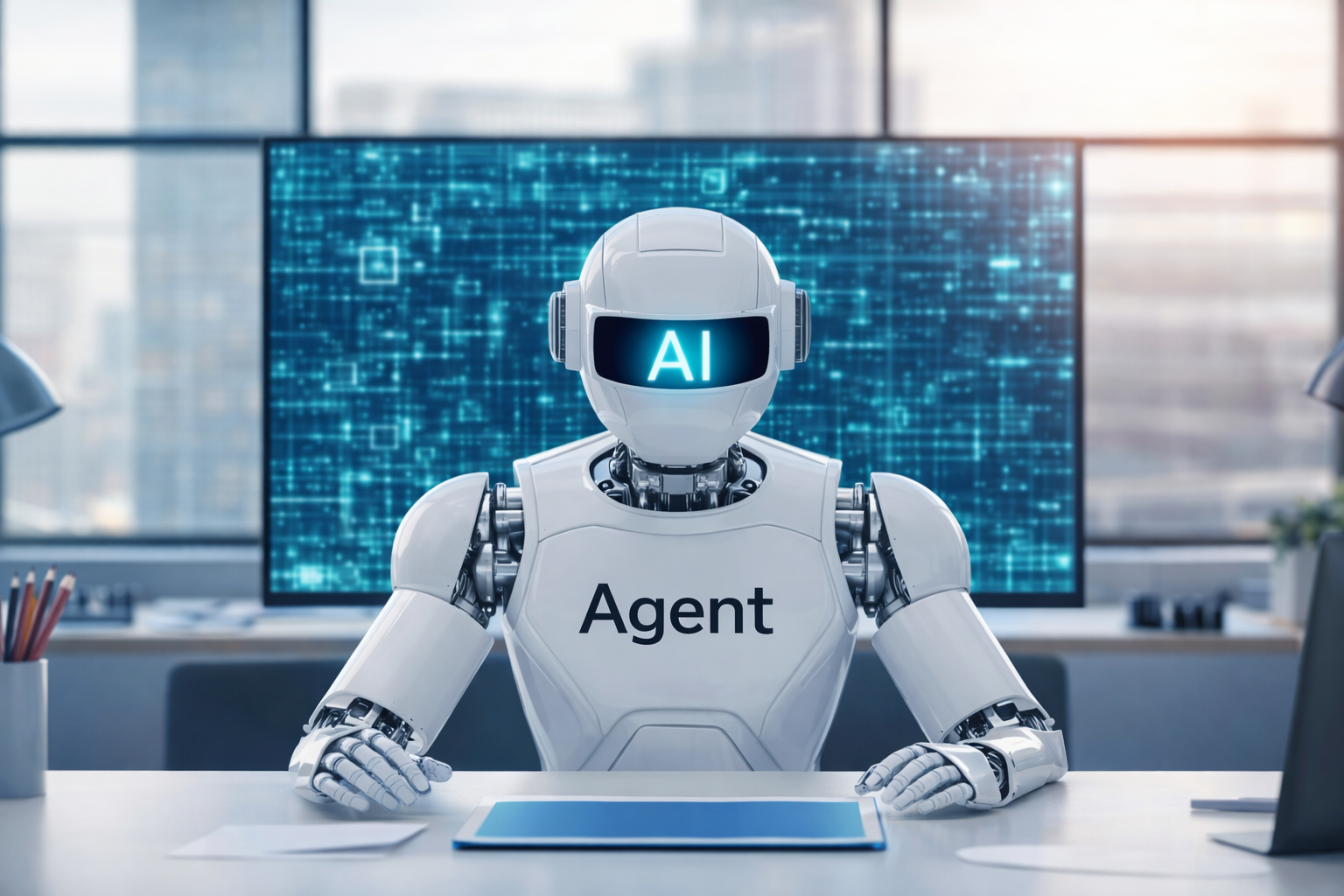
AI agents are autonomous software systems that perceive their environment, process information, make decisions, and take actions to achieve specific goals — often without continuous human supervision.
Unlike traditional automation tools, AI agents can:
-
Analyze real-time data
-
Adapt to new information
-
Learn from past interactions
-
Make goal-oriented decisions
For example, recommendation engines on platforms like Amazon or Netflix function as AI agents by learning user behavior and optimizing suggestions.
🔗 External Resource: Learn more about intelligent agents from the official IBM guide on AI (https://www.ibm.com/topics/artificial-intelligence)
How AI Agents Work
AI agents typically follow a four-step loop:
-
Perception – Collect data from the environment
-
Processing – Analyze data using machine learning models
-
Decision Making – Choose the best possible action
-
Action Execution – Perform tasks automatically
Advanced AI agents also use technologies like:
-
Machine Learning (ML)
-
Natural Language Processing (NLP)
-
Reinforcement Learning
-
Large Language Models (LLMs)
These technologies allow AI agents to become smarter over time.
Types of AI Agents
1. Reactive Agents
Respond to immediate inputs without memory of past actions.
2. Model-Based Agents
Use internal data models to make smarter decisions.
3. Goal-Based Agents
Focus on achieving specific objectives.
4. Learning Agents
Continuously improve performance based on feedback.
AI Agents in Today’s World
AI agents are already shaping multiple industries:
🔹 Business & CRM Automation
AI agents automate lead scoring, customer segmentation, and support systems.
(Internal Link: Read our guide on Salesforce Flow vs Apex Triggers to understand automation architecture.)
🔹 Healthcare
AI agents assist in diagnostics and patient data analysis.
🔹 Finance
Fraud detection systems use AI agents to monitor suspicious activity in real time.
🔹 E-Commerce
Dynamic pricing and recommendation engines are powered by intelligent agents.
The Future AI Agents Are Creating
The next generation of AI agents will be:
Autonomous Decision Makers
Businesses will rely on AI agents for strategic decisions, not just routine automation.
Multi-Agent Collaboration
Different AI agents will communicate with each other to complete complex workflows.
Personalized Digital Assistants
AI agents will become deeply integrated into daily life — managing schedules, finances, and even health insights.
AI-Driven Enterprises
Organizations will transition from digital businesses to fully AI-orchestrated ecosystems.
🔗 External Resource: Explore how AI is shaping the future at the World Economic Forum (https://www.weforum.org/agenda/archive/artificial-intelligence)
Benefits of AI Agents
-
Increased efficiency
-
Reduced operational costs
-
24/7 automation
-
Improved decision accuracy
-
Scalable intelligence
However, businesses must also consider ethical AI, transparency, and data security while deploying AI agents.
Challenges of AI Agents
-
Data privacy concerns
-
Bias in AI models
-
Regulatory compliance
-
Over-automation risks
Balancing innovation with responsible AI governance will define the next decade.
Conclusion
AI agents are more than a technological trend — they represent a fundamental shift in how systems operate and make decisions. From CRM automation to intelligent digital assistants, AI agents are reshaping industries and redefining efficiency.
Organizations that embrace AI agents strategically will not just automate tasks — they will build intelligent ecosystems ready for the future.